
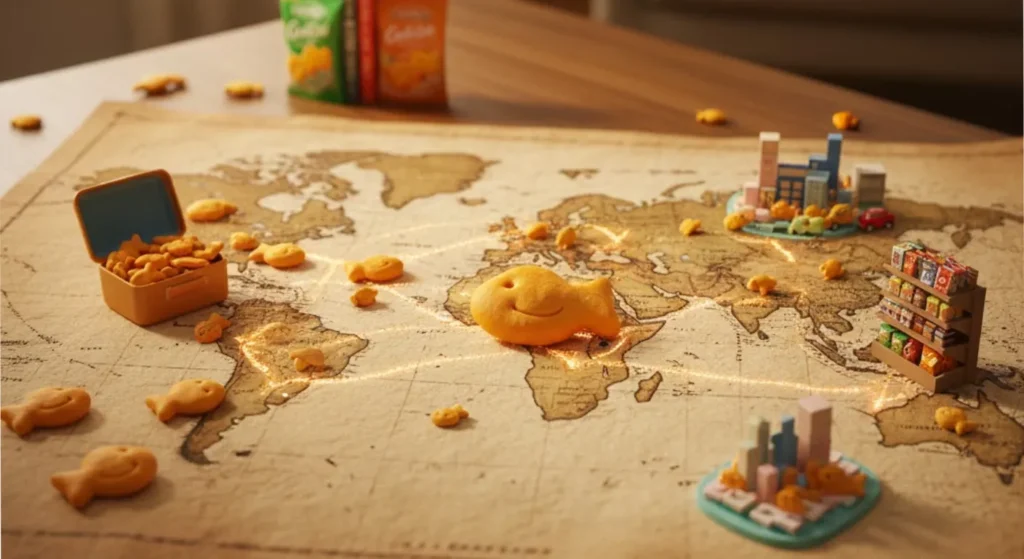
Goldfish crackers didn’t just become popular—they became inevitable. From school lunchboxes and family road trips to bars, dorm rooms, and even outer space, these tiny smiling snacks have quietly taken over the world. What started as a simple fish-shaped cracker has evolved into a cultural icon, a billion-dollar brand, and one of the most recognizable snacks on Earth.
But how did Goldfish crackers rise from humble beginnings to global dominance? The answer lies in a perfect storm of timing, branding genius, nostalgia, smart marketing, and an almost obsessive focus on trust.
Let’s dive deep into the story of how Goldfish crackers swallowed the world whole.
The Global Rise of a Smiling Snack
Today, Goldfish crackers are sold in over 45 countries, known as Finz in the UK, and enjoyed by millions daily. They’re the second most popular cracker brand in the United States, with Americans consuming an estimated 150+ billion Goldfish every year.
They’re not just snacks anymore—they’re cultural shorthand. Goldfish symbolize childhood, comfort, reliability, and fun. That emotional connection is the backbone of their global success.
From Swiss Bakery to American Obsession
The Swiss Origin Story
The Goldfish cracker was born in Switzerland, not America. In the late 1950s, a Swiss baker named Oscar J. Kambly created a fish-shaped cracker inspired by his wife’s zodiac sign—Pisces. The shape was whimsical, distinctive, and instantly memorable.
This cracker might have stayed a European novelty if not for one woman.
Margaret Rudkin: The Original Food Disruptor
In 1937, Margaret Rudkin, a Connecticut homemaker, began baking bread to help her son manage severe allergies and asthma. Her all-natural, stone-ground whole wheat bread became wildly popular, leading her to found Pepperidge Farm—named after the pepperidge trees on her property.
By the 1950s, Rudkin had turned Pepperidge Farm into a premium food brand known for quality and innovation. While traveling through Europe in the early 1960s, she discovered the Swiss fish-shaped cracker and immediately saw its potential.
She licensed the recipe, brought it back to the U.S., and just like that, Goldfish crackers were born.
A Bar Snack Before a Kid Snack
Surprisingly, Goldfish crackers weren’t originally aimed at kids.
For their first 35 years in America, Goldfish were marketed as cocktail snacks. They appeared in bars, dinner parties, and even on the appetizer tables of culinary legends like Julia Child, who famously served them alongside her “reverse martinis.”
Even today, trendy bars like Brooklyn’s Dynaco still serve unlimited bowls of Goldfish—proof that their appeal crosses generations.
Built on Brilliant (and Bizarre) Engineering
One of the strangest facts about Goldfish crackers?
The machines used to mass-produce them were based on technology developed by a World War II Nazi code-breaker.
After the war, engineer Ralph Hauenstein encountered a German baker using a hand-cranked press to shape dough into fish. Hauenstein reverse-engineered the process, modernized it, and sold the machines to Pepperidge Farm—forever changing snack history.

The Power of the Smile: Branding That Changed
“The Snack That Smiles Back”
In 1997, Pepperidge Farm made a defining decision: they gave Goldfish crackers faces.
After extensive research—including consulting psychologists—Goldfish crackers were redesigned with a subtle, friendly smile. The goal wasn’t cuteness—it was trust.
Studies show children instinctively respond to warm, non-threatening facial expressions. The smile made Goldfish feel safe, friendly, and emotionally approachable.
This single design decision helped cement Goldfish as the ultimate kids’ snack.
Smart Marketing Without Over-Marketing
Goldfish succeeded by not trying too hard.
While competitors chased shock value and extreme flavors, Goldfish leaned into:
- Wholesomeness
- Consistency
- Familiarity
- Humor without edge
Campaigns like animated fish characters, playful packaging, and kid-friendly messaging kept the brand fresh without alienating parents.
Eventually, Pepperidge Farm phased out loud mascots to refocus on the product itself—baked, never fried, made with real cheese.
Why Parents Trust Goldfish Crackers
Goldfish crackers thrive in a competitive snack landscape because they occupy a unique middle ground: not junk food, not health food—but trusted food.
Nutritional Snapshot (Per Serving)
- ~150 calories
- No artificial preservatives
- No artificial flavors
- Colored using natural sources like beet juice
- Fortified with essential vitamins and minerals
They compete less with chips and candy and more with:
- Yogurt
- Granola bars
- String cheese
- Fruit snacks
Riding the Snacking Revolution
American eating habits have changed dramatically. Three full meals a day have been replaced by constant grazing.
Goldfish benefited massively from this shift:
- Portable
- Shelf-stable
- Mess-free
- Portionable
As snacking became socially acceptable—and even encouraged—Goldfish were perfectly positioned to dominate.
Innovation Without Alienation
Goldfish don’t change who they are—they change how they’re enjoyed.
Over the years, innovations have included:
- Flavor Blasted varieties
- Whole grain options
- Organic versions
- Pretzel Goldfish
- Graham cracker Goldfish
- Seasonal & limited editions
Even playful flavors like Hot Cocoa Grahams reinforce fun without risking brand trust.
Nostalgia: The Secret Weapon
Goldfish have mastered something few brands achieve: multi-generational loyalty.
Parents who grew up eating Goldfish now buy them for their kids. College students receive them in care packages. Adults snack on them secretly at work.
Nostalgia keeps Goldfish relevant long after consumers “age out” of the target demographic.
Weathering Storms and Recalls
No global brand is immune to setbacks. Goldfish faced a major challenge during a voluntary salmonella-related recall tied to a supplier issue.
The company acted fast:
- Immediate recall
- Full transparency
- Sterilization of production lines
No illnesses were reported, and consumer trust remained intact—because Goldfish had spent decades building it.
Goldfish Go Global (and Beyond Earth)
Goldfish crackers have:
- Reached 45+ countries
- Been renamed Finz in the UK
- Traveled into outer space aboard the Space Shuttle Discovery
Very few snacks can claim both playground and planetary appeal.

Why Goldfish Crackers Won’t Disappear Anytime Soon
Goldfish succeed because they’re not chasing trends—they’re building habits.
They win because:
- Kids love them
- Parents trust them
- Adults feel nostalgic about them
- Retailers can’t ignore them
Goldfish aren’t flashy. They’re familiar. And in food culture, familiarity is power.
Final Thoughts: The Snack That Truly Took Over the World
Goldfish crackers didn’t conquer the world by being loud, extreme, or controversial. They did it by being reliable, friendly, and quietly brilliant.
They smile. Stay consistent. Evolve just enough.
And whether you’re six or sixty, you probably still reach for them when no one’s watching.
Frequently Asked Questions
1. Why are Goldfish crackers so popular around the world?
Goldfish crackers are popular worldwide because they combine simple ingredients, a fun shape, and strong emotional branding. Their friendly smile appeals to kids, while parents trust them as a baked, not fried snack made with real cheese. Add decades of nostalgia, consistent quality, and smart global distribution, and Goldfish become more than a snack—they become a household staple.
2. Where did Goldfish crackers originally come from?
Goldfish crackers originated in Switzerland in the late 1950s. A Swiss baker created the fish shape as a tribute to his wife’s zodiac sign, Pisces. The recipe was later discovered by Pepperidge Farm founder Margaret Rudkin, who brought it to the United States in the early 1960s, where it became an instant success.
3. Are Goldfish crackers actually healthy?
Goldfish crackers are considered a better-for-you snack, but not a health food. They contain no artificial preservatives or flavors, are baked instead of fried, and are made with real cheese. However, they are still a processed snack and can be high in sodium, so they’re best enjoyed in moderation as part of a balanced diet.
4. Why do Goldfish crackers have a smile?
The smile on Goldfish crackers was introduced in 1997 after extensive research showed that children respond positively to friendly, non-threatening facial expressions. Psychologists helped design a smile that felt warm and safe, helping the brand build trust with kids and parents alike. This feature became central to Goldfish’s identity as “The Snack That Smiles Back.”
5. How did Goldfish crackers become a billion-dollar brand?
Goldfish crackers became a billion-dollar brand through consistent branding, smart marketing, and cultural relevance. By focusing on trust, nostalgia, and innovation without straying from their core identity, Goldfish expanded into global markets, introduced new flavors, and adapted to modern snacking habits—all while staying instantly recognizable.