There’s a very specific moment almost everyone has had.
You open a bag of Goldfish crackers planning to eat “just a few”… and somehow the bag is empty.
They’re salty, cheesy, tiny, and ridiculously snackable. Kids love them. Adults pretend they’re buying them for kids.
But here’s the surprising part: once you make them at home, store-bought ones suddenly taste a little flat.
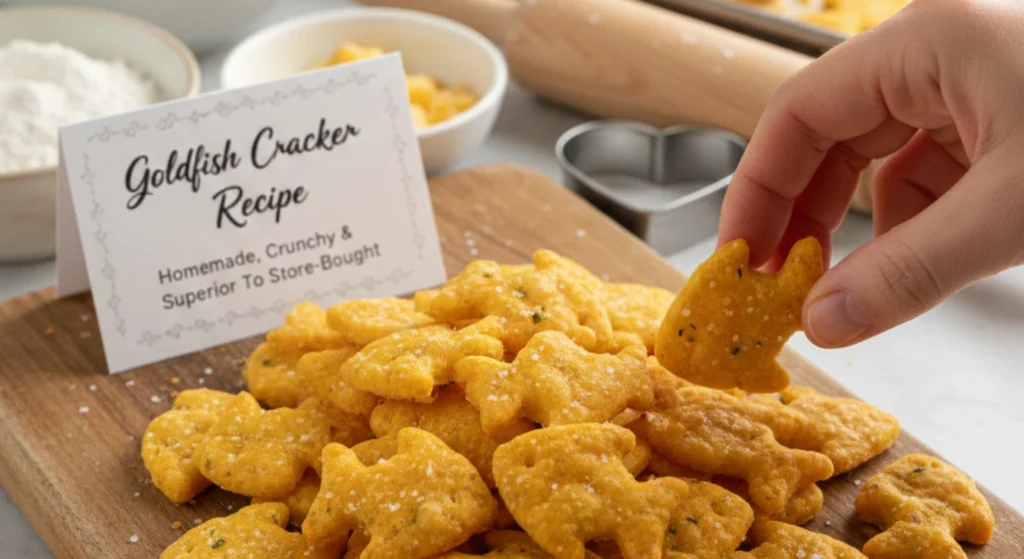
A homemade goldfish cracker recipe doesn’t just copy the original — it actually improves it. The cheese flavor is stronger, the texture is crispier, and you don’t get that dry, processed aftertaste.
The first time I made these, I wasn’t expecting much. I assumed they would taste like regular crackers shaped like fish.
They didn’t.
They tasted like warm baked cheddar — the kind of flavor you get from fresh cheese biscuits — just in a tiny crunchy form. And once they cooled, they developed that exact snap you expect when you bite into a real Goldfish cracker.
After a few test batches (and a few mistakes), I figured out why many recipes online fail. Most of them make a dough that’s either too wet, too thick, or not baked long enough. That’s why people often say their crackers come out soft instead of crunchy.
This version fixes those problems.
What Makes Homemade Goldfish Better
The difference is the cheese.
Packaged crackers have to sit on a shelf for months, so the flavor is muted on purpose. Homemade crackers don’t have that limitation. You’re baking real cheddar into the dough, and when it melts and cooks, it creates a deeper flavor — almost like toasted cheese.
Also, fresh butter changes everything. It gives the crackers a slight richness that store versions simply don’t have.
And maybe the biggest bonus: you know exactly what you’re eating. No preservatives, no stabilizers, no mystery powders — just flour, cheese, butter, and a few basics.
Ingredients You’ll Need
You probably already have everything in your kitchen.
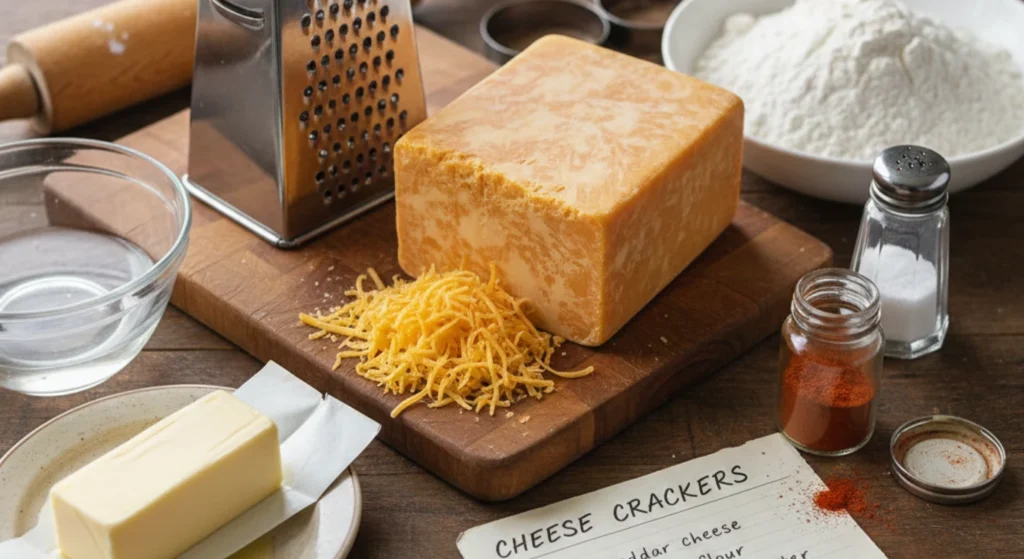
- sharp cheddar cheese
- butter
- flour
- salt
- a little cold water
- optional paprika for color and depth
The cheddar matters more than anything else here. Mild cheddar makes bland crackers. Sharp cheddar gives that familiar snack flavor.
If you grate your own cheese instead of using pre-shredded, the texture improves noticeably because packaged shredded cheese has anti-caking powder that prevents smooth dough.
Making the Dough
Start by combining the shredded cheese and softened butter. When they mix together, it becomes creamy and almost spreadable. That’s exactly what you want because it means the cheese will distribute evenly throughout the crackers.
Add the flour and salt and mix again. At first it looks dry and crumbly — this is normal. Slowly add cold water a little at a time. Suddenly the mixture pulls together and forms a soft dough.
You’re aiming for the texture of modeling clay. If it sticks to your hands, it has too much water. If it cracks apart, it needs a tiny splash more.
This small balance is what determines whether your crackers end up crispy later.
The Step Most People Skip (And Why Their Crackers Fail)
Now comes the part that many recipes rush: chilling the dough.
Wrap it and place it in the refrigerator for about 25 minutes.
This single step fixes three problems at once. The butter firms up, the flour hydrates, and the crackers hold their shape while baking. Without chilling, the fish shapes puff and the centers stay soft.
It seems small, but it’s the reason homemade goldfish finally come out crunchy instead of bready.
Rolling and Shaping
Preheat your oven to 350°F (175°C).
Roll the dough thin — thinner than you think you should. About 1/8 inch works best. Thick dough makes soft crackers. Thin dough makes the signature crisp snap.
You can use a tiny fish cutter if you have one, but honestly any small cutter works. Even small squares taste identical.
If you want the classic look, poke a tiny eye with a toothpick and press a small smile using a knife tip. Children absolutely love helping with this part and it turns the recipe into an activity instead of just baking.
Baking
Place the crackers onto a lined baking tray and bake for around 12 to 15 minutes.
The visual cue matters more than the clock. You’re looking for lightly golden edges and a slightly deeper orange color than the raw dough.
They will not feel crunchy immediately.
This is important.
Fresh from the oven they feel slightly soft. As they cool, the moisture evaporates and they transform into crispy crackers. Give them 15 minutes and you’ll hear the snap when you bite one.
Why Your Crackers Might Be Soft
If your batch doesn’t come out crunchy, one of three things usually happened.
The dough was rolled too thick, the oven temperature ran low, or they were taken out too early. Baking just two minutes longer often fixes everything. Slightly golden is perfect; pale means soft.

Flavor Ideas You Can Try
Once you make the basic version, it becomes addictive to experiment.
Adding garlic powder creates a savory snack similar to cheese breadsticks. A pinch of chili flakes makes a spicy version adults love. Parmesan gives a sharper, nuttier taste.
You can even make sweet versions. Replacing the cheese with a lightly sweet cream-based dough makes a dessert-style snack that pairs surprisingly well with strawberry-flavored treats.
Storing Them
After cooling completely, store them in an airtight container at room temperature. They stay crisp for about a week.
If they ever lose crunch, simply place them back in the oven for a few minutes and they come back to life. Because there are no preservatives, they behave like real baked goods instead of factory snacks.
You can also refrigerate or freeze the dough and bake fresh crackers whenever you want, which many parents end up doing for school lunches.
Are Homemade Goldfish Healthier?
They’re still a snack — but they are cleaner.
You’re using real cheese protein, real butter, and basic flour instead of processed oils and additives. For many families, that’s the whole reason to make them. Kids get the same fun snack experience, but parents feel better about what’s inside it.
Frequently Asked Questions
Yes — and they’re surprisingly easy. A homemade goldfish cracker recipe only uses basic pantry ingredients like cheese, butter, flour, and water. The biggest difference is flavor: homemade versions taste cheesier and fresher because you’re using real cheddar instead of shelf-stable flavoring.
This is the most common issue. Usually the dough was rolled too thick or the crackers were removed from the oven too early. They should be slightly golden around the edges before you take them out. Also remember they crisp up while cooling, so give them at least 10–15 minutes after baking.
Sharp cheddar works best. Mild cheddar doesn’t give enough flavor, and mozzarella makes them soft. The stronger the cheddar, the closer the taste will be to classic snack crackers. Freshly grated cheese also works better than packaged shredded cheese.
Not at all. The shape doesn’t affect the taste. You can cut small squares, circles, or even thin strips. The fish shape is just for fun — especially for kids — but the goldfish cracker recipe works the same either way.
Final Thoughts
This goldfish cracker recipe is one of those rare kitchen projects that’s both easy and surprisingly satisfying. It doesn’t take special equipment, the ingredients are simple, and the result tastes familiar yet noticeably better.
The first batch usually disappears quickly. Not because people are hungry — but because they keep reaching for “just one more.”
And once you hear that crisp snap and real cheddar flavor, the boxed version just isn’t quite the same anymore.