
- Goldfish crackers were invented in Switzerland in 1958 by Oscar J. Kambly — not in America.
- The fish shape was inspired by a birthday gift idea, designed as a symbol of luck and good fortune.
- Pepperidge Farm brought Goldfish crackers to the United States in 1962 after founder Margaret Rudkin tasted them in Switzerland.
- Despite the name, Goldfish crackers contain zero real fish — they are baked cheese crackers.
- Over 100 billion Goldfish crackers are produced annually, making them one of the best-selling snacks in the world.
- The smiling face was added to the cracker design in 1997, further boosting the brand’s emotional appeal.
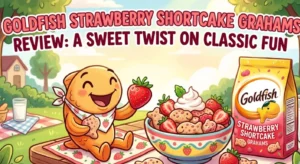
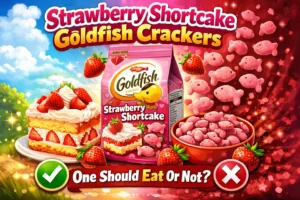
- Goldfish crackers now come in dozens of varieties, including the fan-favorite Goldfish Grahams Strawberry Shortcake Flavored Snack Crackers.
You open a bag of Goldfish crackers, pour a handful into your palm, and suddenly you are wondering — why are Goldfish crackers shaped like fish? It seems like such a simple question, but the answer stretches across continents, decades, and some genuinely clever design thinking.
These tiny orange fish are one of the most recognized snack shapes in the world. You can find them in school lunch boxes, movie snack bowls, office desk drawers, and kitchen pantries in millions of homes. But the fish shape was never random. It was intentional, symbolic, and frankly, a little bit brilliant.
In this article, you will discover the full story — from a Swiss bakery in the 1950s to the shelves of every grocery store in America. We will dig into the origin, the design choices, the marketing genius, and the science behind why this shape has endured for over six decades. Whether you are a snack history enthusiast, a curious parent, or just someone who loves these little crackers, this is the complete guide you have been looking for.
What Are Goldfish Crackers?
Before we get into the shape story, it helps to understand exactly what Goldfish crackers are — and what they are not. Many people carry assumptions about these snacks that are not quite accurate.
Ingredients and Nutritional Overview
Goldfish crackers are small, baked cheese-flavored snack crackers produced by Pepperidge Farm, a brand owned by the Campbell Soup Company. The classic cheddar variety is made from enriched wheat flour, cheddar cheese, salt, and a handful of other standard baking ingredients. They are baked, not fried, which gives them a light, crunchy texture.
A standard 55-piece serving contains roughly 140 calories, 5 grams of fat, 20 grams of carbohydrates, and 3 grams of protein. They are not a superfood, but compared to many competing snack crackers, their ingredient list is relatively short and readable.
Goldfish crackers are free from artificial preservatives, artificial colors, and artificial flavors. Many varieties are also certified kosher. If you are wondering about dietary restrictions, there is a full breakdown of whether Goldfish crackers are suitable for vegetarians worth reading before you stock up.
Are Goldfish Crackers Made From Real Fish?
This is one of the most common misconceptions about the snack. The name “Goldfish” and the fish shape lead many people — especially children — to assume there must be actual fish somewhere in the cracker. There is none.
The crackers get their name from their visual appearance: a small, golden-orange fish. The flavor comes entirely from real cheddar cheese. If you have ever fed one to a curious toddler who then asked if they are eating a fish, the answer is a simple and reassuring no.
One more thing worth clearing up for pet owners: while the crackers are harmless to humans, you should definitely read about whether dogs can safely eat Goldfish crackers before sharing your snack bowl with your four-legged companion.
The History and Origin of Goldfish Crackers
The origin story of Goldfish crackers is not what most American consumers would guess. These snacks were not born in a Campbell Soup boardroom or a New Jersey test kitchen. They were created in Switzerland — and brought to America by a determined entrepreneur with exceptional taste.
Who Invented the Goldfish Cracker?
The Goldfish cracker was invented by Oscar J. Kambly, a Swiss baker and owner of a confectionery company in Bern, Switzerland. According to food historians, Kambly originally created the fish-shaped crackers as a gift for his wife, whose zodiac sign was Pisces — the fish.
This is a charming and widely cited origin story. The idea was personal: a husband creating a whimsical, edible tribute to his wife’s astrological sign. From that small, sentimental act came one of the best-selling snack shapes in history.
When Were Goldfish Crackers First Released?
Goldfish crackers were first produced and sold in Switzerland in 1958. They were a regional Swiss specialty for several years before catching the attention of someone who would change their trajectory entirely.
The crackers initially came in a simple, lightly salted cheese variety. They were popular but modest in scope — a clever regional snack without the global reach they would eventually achieve. That transformation happened thanks to one unexpected encounter in Europe.
How Pepperidge Farm Brought Goldfish to America
Margaret Rudkin, the founder of Pepperidge Farm, first encountered Goldfish crackers during a trip to Europe in the early 1960s. Rudkin was already an established figure in American food — she had built Pepperidge Farm from a home baking operation into a nationally recognized brand known for quality breads and cookies.
When she tasted the Goldfish crackers during her European travels, she recognized their potential immediately. She negotiated the rights to produce and sell the crackers in the United States, and Goldfish crackers officially launched in the American market in 1962.
Pepperidge Farm was acquired by the Campbell Soup Company in 1961, just one year before Goldfish launched in America. That corporate backing gave the new cracker the distribution network it needed to grow rapidly across the country.
Today, Pepperidge Farm Goldfish crackers are a flagship product for Campbell Soup Company. According to Campbell Soup Company’s official reports, Goldfish is consistently one of their top-performing snack brands by revenue.
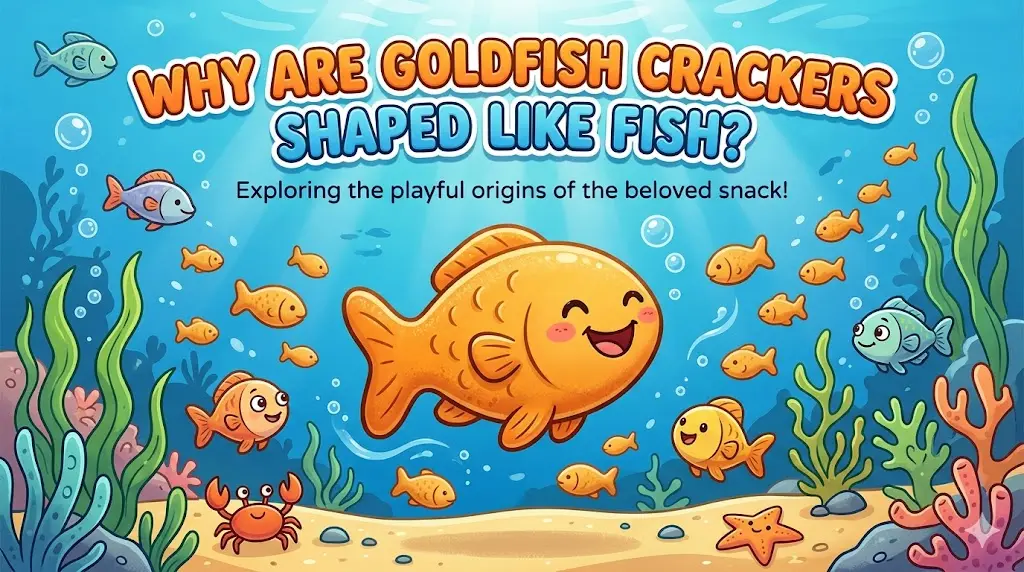
Why Are Goldfish Crackers Shaped Like Fish?
Here is the heart of the question everyone asks. Understanding why Goldfish crackers are shaped like fish means understanding both the personal story behind the original design and the broader principles that made the shape so effective as a product and a brand.
The Swiss Inspiration Story
As mentioned earlier, Oscar J. Kambly designed the fish shape as a nod to his wife’s Pisces zodiac sign. This is the most direct answer to the question of why the fish shape exists — it was a personal gesture that happened to translate into a remarkable product design.
The fish is one of the most universally recognizable shapes in human culture. It is simple enough to be reproduced consistently in a baked cracker at small scale, yet distinctive enough to be immediately identifiable. A cracker shaped like a square or rectangle would have been forgettable. A cracker shaped like a fish? That sticks in the memory.
There is also a functional dimension to the shape. The rounded body and tapered tail of a fish create a form that bakes evenly, holds its shape after packaging, and delivers a satisfying snap when bitten. The shape is not just cute — it works.
Symbolism and the Meaning Behind the Fish Shape
The fish shape carries significant cultural and symbolic weight, which helps explain why it resonates so broadly across demographics and cultures. In many traditions, fish are symbols of luck, abundance, and prosperity. In Christian iconography, the fish (ichthys) is one of the oldest and most recognized religious symbols. In Asian cultures, particularly Chinese tradition, goldfish are powerful symbols of good fortune and wealth.
Naming a snack after a goldfish — and shaping it accordingly — taps into a rich vein of positive cultural associations. You are not just eating a cracker. You are eating a symbol that many cultures associate with something good.
Whether Kambly consciously intended all of this symbolism is unclear. But the result is that the fish shape carries an emotional weight that a diamond, star, or circle simply would not replicate. That is the snack shaped like fish meaning at its deepest level: it is a shape that feels meaningful before you have even taken a bite.
Why the Fish Shape Works So Well for Kids
Children are not just consumers of Goldfish crackers — they are the primary audience. And child psychology offers a clear explanation for why the fish shape is so effective with young eaters.
Research in early childhood development shows that children respond strongly to recognizable, zoomorphic shapes — shapes that resemble living animals. Foods shaped like animals feel more playful and less intimidating to young children, which makes them more likely to eat and enjoy them.
According to a study published in the National Library of Medicine, food presentation and shape significantly impact children’s eating behavior and food acceptance. A cracker shaped like a recognizable creature creates a sensory story around the eating experience — it becomes an event, not just a snack.
The addition of a smiling face to the Goldfish cracker design in 1997 doubled down on this principle. The smile made the cracker feel like a character rather than a product. Children were no longer just eating crackers — they were eating little happy friends, which sounds slightly dark when stated plainly but is genuinely effective as a design concept.
Try a Flavor You Have Never Tried Before
The iconic fish shape comes in sweet varieties too. Discover the delightfully different Goldfish Grahams Strawberry Shortcake Flavored Snack Crackers — a sweet twist on the classic you love.
Shop Strawberry Shortcake Goldfish →The Marketing Power Behind the Fish Shape
Understanding why Goldfish crackers are shaped like fish also means understanding what the shape has done for the brand over time. The fish shape is not just a design decision from 1958 — it is a marketing engine that has compounded in value for over 60 years.
Recognition is instant. You can identify a Goldfish cracker from across the room. No label needed, no branding required. The shape is the brand. This level of visual recognition is extraordinarily rare in the food industry and almost impossible to buy with advertising alone. It has to be built into the product itself.
The shape is ownable. Pepperidge Farm owns the Goldfish shape in the minds of consumers. When parents say “grab a bag of Goldfish,” they are not describing a product category — they are naming a specific brand. That kind of noun-to-brand equivalence is the holy grail of consumer marketing, and the distinctive fish shape is central to achieving it.
It scales across varieties. One of the smartest things Pepperidge Farm has done with the fish shape is apply it consistently across a dramatically expanding product line. Whether you are eating the original cheddar, a pizza-flavored variety, a pretzel version, or a sweet graham cracker variety like the Goldfish Grahams Strawberry Shortcake Flavored Snack Crackers, you are always eating a fish. The shape unifies the entire brand family visually.
Nostalgia compounds over decades. Adults who grew up eating Goldfish crackers now buy them for their own children. The shape triggers a visceral, positive emotional memory from childhood that no amount of marketing copy can manufacture. The fish shape has become a generational bridge — a snack that says “this is safe, this is familiar, this is good.”
How Goldfish Crackers Have Evolved Over the Years
The Goldfish cracker that exists today is very different from what Oscar Kambly first baked in his Swiss kitchen in 1958, yet it is also remarkably the same. The shape has remained constant. Everything else has expanded dramatically.
When Pepperidge Farm launched Goldfish in the US in 1962, the lineup was simple: a lightly seasoned cheese cracker in a single flavor. Over the following decades, the product line grew methodically, each new variety testing whether the Goldfish platform could extend into new flavor territories without losing its identity.
| Era | Milestone | Significance |
|---|---|---|
| 1958 | Original Swiss launch by Oscar J. Kambly | Fish shape born as a zodiac tribute |
| 1962 | US launch by Pepperidge Farm | Cheddar variety introduced to American market |
| 1970s–80s | Flavor line expansion begins | Pizza, pretzel, and additional cheese flavors added |
| 1997 | Smiling face added to cracker design | Character identity deepens emotional connection |
| 2000s | Whole grain varieties introduced | Health-conscious parents targeted |
| 2010s | Limited edition & seasonal flavors launch | Brand keeps relevance through novelty |
| 2020s | Graham cracker & sweet varieties expand | Goldfish Grahams enters dessert-adjacent snack space |
Today, Goldfish crackers come in over 30 distinct varieties. You can explore bold options like the Old Bay seasoned Goldfish crackers for a spicier experience, or browse an extensive collection of creative recipes that use Goldfish crackers as an ingredient in both savory and sweet dishes.
Fun Facts You Probably Did Not Know About Goldfish Crackers
Now that you have the full origin story and the design philosophy, here are some numbers and facts that put the scale and legacy of this snack into perspective.
- Over 100 billion crackers produced annually. According to Pepperidge Farm, more than 100 billion individual Goldfish crackers are manufactured every year. That is roughly 13 crackers for every person on earth, produced annually.
- The smiling face debuted in 1997. For nearly 40 years, the fish had no facial expression. When the smile was added, it dramatically humanized the cracker and became one of the most beloved design changes in snack history.
- The “Xtreme” variety launched in 2003. Pepperidge Farm briefly offered an intensely flavored line aimed at older kids and teenagers, proving the brand’s willingness to experiment beyond its core demographic.
- Goldfish are consistently a top-5 cracker brand in the US. Retail data from Statista and Nielsen confirm that Goldfish crackers routinely rank among the highest-selling crackers in American grocery stores by revenue and unit volume.
- The crackers are allergy-friendly in key ways. If you have nut allergy concerns in your household, it is worth checking out whether Goldfish crackers are nut-free before buying.
- They have a surprisingly long shelf life. Stored properly, Goldfish crackers can stay fresh well past their purchase date. You can learn exactly how long Goldfish crackers remain good for in different storage conditions.
- The “why are Goldfish snacks fish shaped” question gets tens of thousands of Google searches every month. It is one of the top snack-related questions in the United States, showing just how deeply this product lives in the cultural consciousness.
Frequently Asked Questions
Conclusion — Why the Fish Shape Still Works After All These Years
The question of why Goldfish crackers are shaped like fish has a surprisingly rich answer. It starts with a Swiss baker’s gift to his wife in 1958, travels through the sharp business instincts of Margaret Rudkin, and lands in the hands of millions of snackers who reach into a bag without thinking twice about the shape they are holding.
The fish shape endures because it is simultaneously personal, symbolic, and brilliant from a design perspective. It is recognizable at a glance, impossible to mistake for anything else, and loaded with positive cultural associations accumulated over decades. It is simple enough to bake consistently at enormous scale and distinctive enough to define an entire brand.
Most importantly, the fish shape has proven infinitely flexible. It works for classic cheddar, for pizza, for pretzels, and yes — even for a sweet graham cracker variety like the Goldfish Grahams Strawberry Shortcake Flavored Snack Crackers that brings a completely different flavor experience while keeping the iconic shape intact.
That shape is not just packaging. It is the product. It is the brand. It is the memory. And after more than 60 years, it still works perfectly — one small golden fish at a time.
Ready to Taste Something New?
The Goldfish cracker legacy keeps evolving — and the sweet side is just as good as the savory. Give the Strawberry Shortcake Goldfish Grahams a try and experience the iconic fish shape in a whole new flavor dimension.
Buy Goldfish Crackers Now →