Every time you pop a cheddar Goldfish cracker in your mouth, you’re tasting a 65-year-old love story that traveled across an ocean to become one of America’s most beloved snacks.
So, when were Goldfish crackers invented? Goldfish crackers were invented in 1958 by Swiss biscuit maker Oscar J. Kambly in Switzerland. They came to the United States in 1962 when Pepperidge Farm founder Margaret Rudkin discovered them during a vacation and brought them to American markets.
But there’s so much more to this story than just dates. What started as a birthday present for a beloved wife became a billion-dollar brand and the fastest-growing cracker in America. Let’s dive into the delicious history of how these tiny fish-shaped snacks conquered the world.
The Birth of Goldfish: A Birthday Gift Made of Love (1958)
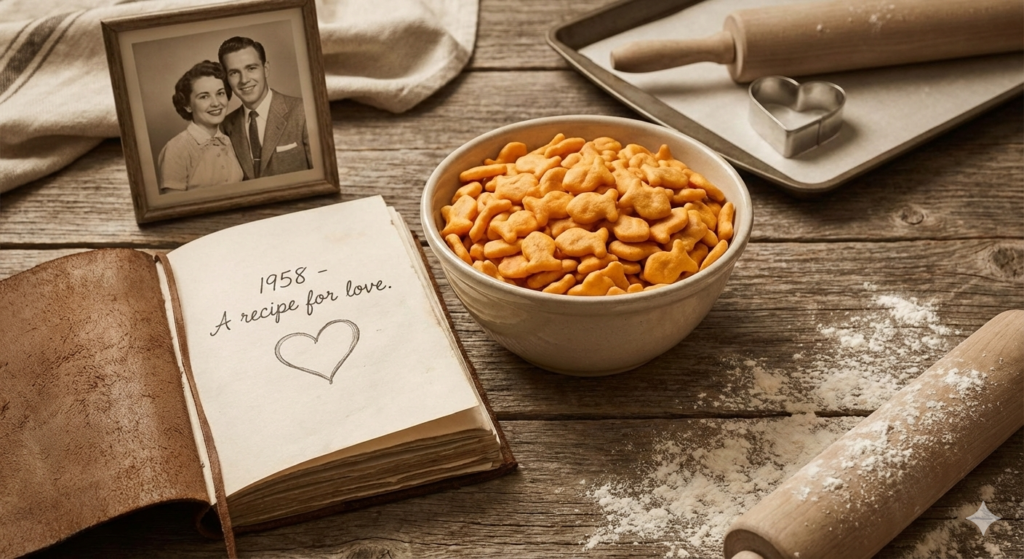
Picture this: It’s 1958 in the charming town of Trubschachen, Switzerland. Oscar J. Kambly, a talented biscuit maker at the family-owned Kambly company, is thinking about the perfect birthday present for his wife.
His wife was a Pisces, and as astrology lovers know, the Pisces zodiac sign is represented by two fish. Oscar had an inspired idea: why not create a special cracker shaped like a fish? Not just any fish, but a charming little goldfish that would symbolize his love and thoughtfulness.
And so, in the Swiss Alps, the very first Goldfish cracker was born. Originally called “Goldfischli” (which means “little goldfish” in Swiss German), these crackers had a buttery, slightly salty taste and that perfect satisfying crunch. But what made them truly special was the love and care behind their creation.
In a world of mass-produced snacks created by marketing committees, Goldfish began as one man’s thoughtful gesture for the woman he loved. It’s a reminder that sometimes the best products start with a simple, heartfelt idea.
Wikipedia: Goldfish Crackers
Margaret Rudkin’s Swiss Discovery (Early 1960s)
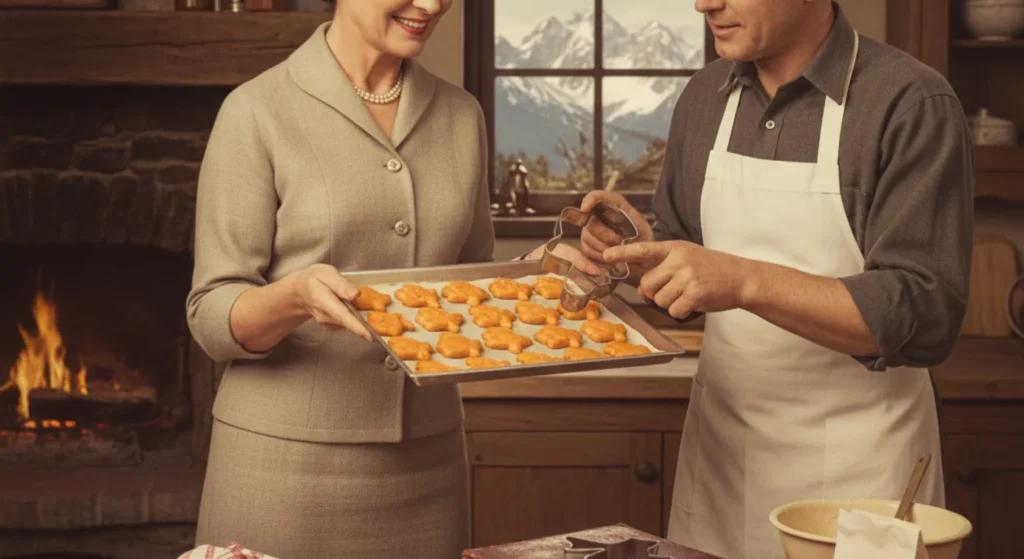
Fast forward a few years to the early 1960s. Margaret Rudkin, the visionary founder of Pepperidge Farm, was on vacation in Switzerland. Rudkin was already a legendary figure in the American food business—she’d started Pepperidge Farm in 1937 from her home kitchen, baking preservative-free bread for her son who had asthma.
During her Swiss travels, Margaret stumbled upon Oscar’s little goldfish crackers. She was immediately charmed. The unique shape, the quality ingredients, the delightful taste—she knew these would be perfect for American families.
Margaret had a gift for spotting European delicacies and bringing them to America. She’d already done this successfully with Milano cookies. Goldfish crackers would be her next cross-Atlantic triumph.
She negotiated a licensing deal with Oscar Kambly, and preparations began to introduce these charming Swiss crackers to the United States. It was a match made in snack heaven—European craftsmanship meeting American entrepreneurial spirit.
Goldfish Swim to America: The 1962 Launch
In 1962, Goldfish crackers officially made their American debut through Pepperidge Farm. The launch featured five original flavors:
- Lightly Salted (later known as Original)
- Cheese
- Barbecue
- Pizza
- Smoky
Here’s a fun surprise: Cheddar cheese, which is now the most popular Goldfish flavor by far, wasn’t even part of the original lineup! It didn’t arrive until 1966, four years after the initial launch.
Initially, Goldfish were marketed as a sophisticated cocktail snack for adults—something you’d serve at a dinner party alongside cheese and crackers. In fact, the famous chef Julia Child was such a fan that she regularly served them at her Thanksgiving gatherings, placing bowls of Goldfish next to her famous “reverse martini” (which was basically a glass of vermouth with a splash of gin).
But parents had other ideas. They started packing Goldfish in their children’s lunches, and kids absolutely loved them. The crackers were fun to eat, had a friendly shape, and tasted delicious. Before long, Goldfish had transformed from an adult appetizer into America’s go-to kids’ snack.
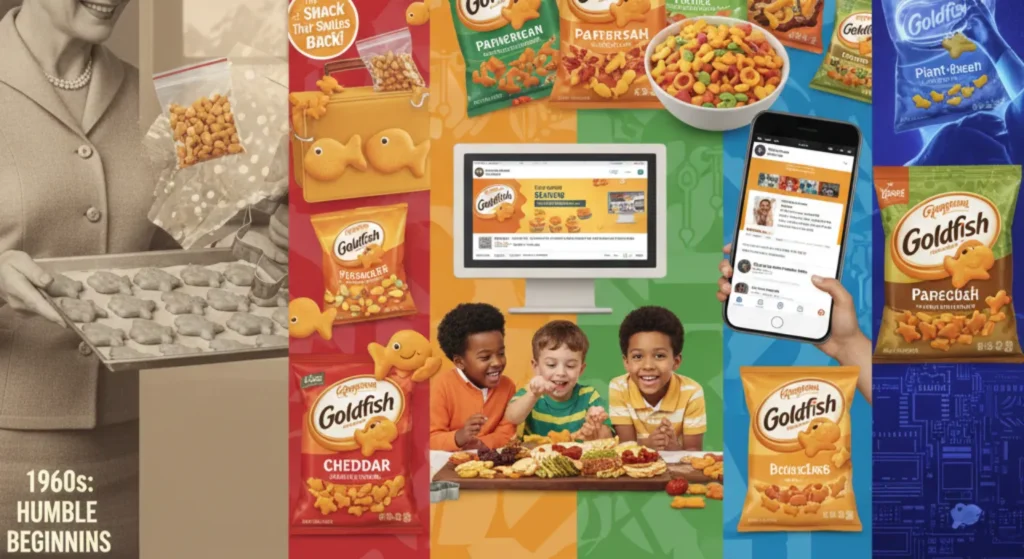
Evolution Through the Decades: From Crackers to Cultural Icon
The 1970s-1980s: Building the Brand
Throughout the 1970s, Goldfish steadily built their reputation through word-of-mouth and strategic marketing. By the 1980s, they were a household name.
Then came an incredible milestone: In 1988, Goldfish crackers went to space! Astronauts brought them aboard the Space Shuttle Discovery mission STS-26. Imagine—those little crackers that started as a birthday present were now floating in zero gravity aboard a NASA spacecraft.
The 1990s: The Smile That Changed Everything
In 1997, Pepperidge Farm made a brilliant marketing move—they added a smiley face to Goldfish crackers. But here’s the genius part: they didn’t put it on every cracker. Only about 40% of Goldfish have the smile.
This created a delightful treasure hunt. Kids (and let’s be honest, adults too) would dig through their snack bowls looking for the smiling fish. The tagline “The Snack That Smiles Back” became iconic. It transformed snacking into an interactive, fun experience.
The 2000s-2010s: Flavor Innovation
The new millennium brought an explosion of varieties. Pepperidge Farm introduced:
- Colors (crackers with natural plant-based dyes in fun colors)
- Baby Goldfish (tiny bite-sized versions)
- Flavor Blasted (intense cheese flavors)
- Goldfish Grahams (sweet varieties for dessert lovers)
- Princess Goldfish (pink crackers that became a hit)
- Character shapes (Mickey Mouse, Star Wars, and more)
They even won a legal victory in 1999 when Nabisco tried to create fish-shaped “Cheese Nips CatDog” crackers. The courts ruled in Pepperidge Farm’s favor, protecting the iconic goldfish shape.
The 2020s: Modern Innovation and Record Growth
The 2020s have been incredible for Goldfish. Campbell Soup Company (which acquired Pepperidge Farm back in 1961) has gone all-in on innovation:
- • 2022: Mega Bites launched—extra-large Goldfish crackers for bigger appetites
- • Limited-edition collaborations with brands like Dunkin’ (Pumpkin Spice Grahams) and Frank’s RedHot (which proved so popular it became a permanent flavor)
- • Goldfish Crisps—a potato chip alternative
- • Old Bay Seasoned and Jalapeño Popper flavors for adventurous eaters
- • 2025: “Awesome Sauce” limited edition variety
The results speak for themselves: According to Campbell Soup Company, Goldfish became the fastest-growing cracker brand in the United States in 2024, with sales increasing by an incredible 33% since 2021.
In October 2024, Pepperidge Farm even temporarily rebranded Goldfish as “Chilean Sea Bass” for one week to appeal to adult snackers—a cheeky marketing campaign that went viral and reminded everyone that these crackers aren’t just for kids.
Fun Facts & Goldfish Trivia You Never Knew
Ready for some mind-blowing Goldfish knowledge? Here are some fun facts that’ll make you the star of your next trivia night:
The Smiley Secret: Not all Goldfish smile back at you! Only 40% have the iconic smiley face, creating a fun hunt in every handful.
The Goldfish Capital: Willard, Ohio produces 50 million Goldfish crackers every single day, earning it the unofficial title of “Goldfish Capital of the World.”
Global Goldfish: These crackers have different names around the world. In the UK, they’re called “Finz.” In Switzerland, they still go by the original name “Goldfischli.”
Celebrity Fans: Julia Child loved them so much she served them at Thanksgiving. The crackers even had a memorable cameo in the TV show “The West Wing,” where character Danny Concannon gives C.J. Cregg a pet goldfish after misunderstanding her love for the crackers!
The Great Debate: Do you eat the head or tail first? This question has sparked countless discussions among Goldfish fans for decades.
Swimming in Soup: Originally, these fish-shaped crackers were designed to “swim” in soup, though most people just snack on them straight from the bag.
Variety is the Spice: As of 2024, there are more than 25 different Goldfish varieties available, from classic cheddar to wild flavors like Spicy Dill Pickle.
Where Goldfish Stands Today
Today, Goldfish crackers are more popular than ever. They’re not just surviving in a competitive snack market—they’re thriving.
The brand has successfully balanced nostalgia with innovation. Parents who grew up eating Goldfish now pack them in their own children’s lunches, creating a beautiful cycle of multi-generational love for these little crackers.
What makes Goldfish special in 2025?
- • They’ve adapted to modern health consciousness with whole grain varieties and Colors made with natural ingredients
- • They’ve embraced bold flavors that appeal to adventurous adult palates (Frank’s RedHot, anyone?)
- • They’ve maintained their playful, fun brand personality that makes snacking joyful
- • They’ve created limited-edition flavors that keep fans excited and engaged
The most popular flavors in 2025? Cheddar still reigns supreme, followed by Pretzel, Pizza, and the bold Flavor Blasted varieties. And exciting new flavors like Strawberry Shortcake Goldfish show that the brand isn’t afraid to push boundaries and surprise us.
The Enduring Legacy of a Love Story
From a Swiss workshop in 1958 to lunchboxes across America in 2025, Goldfish crackers have come an incredible distance. What began as Oscar Kambly’s thoughtful birthday present for his Pisces wife has transformed into a beloved brand worth over a billion dollars.
The journey from Switzerland to America in 1962, guided by Margaret Rudkin’s vision, created something truly special. These aren’t just crackers—they’re tiny ambassadors of joy, nostalgia, and quality that have delighted multiple generations.
So the next time you reach for that familiar carton of smiling fish, remember: you’re tasting history. You’re enjoying a snack that traveled across an ocean, went to space, became a cultural icon, and still manages to make people smile after more than six decades.
That’s the magic of Goldfish—whether you’re 5 or 95, whether you eat them by the handful or one at a time, whether you hunt for the smiling ones or just grab whatever comes out of the bag, these little crackers have a way of making everyday moments a little more fun.
Ready to taste the crackers born from love? Explore our selection of Goldfish flavors at BuyStrawberryShortcakeGoldfish.com, including the limited-edition Strawberry Shortcake variety that’s creating new memories for a new generation of Goldfish fans!
Frequently Asked Questions
Q: When were Goldfish crackers invented?
A: Goldfish crackers were invented in 1958 by Oscar J. Kambly in Switzerland and came to the United States in 1962 through Pepperidge Farm.
Q: Who invented Goldfish crackers?
A: Oscar J. Kambly, a Swiss biscuit maker, invented Goldfish crackers as a birthday present for his wife, who was a Pisces.
Q: Why are Goldfish crackers shaped like fish?
A: They’re shaped like fish because Oscar Kambly’s wife was a Pisces, and the astrological symbol for Pisces is a fish. He created them as a thoughtful birthday gift based on her zodiac sign.
Q: When did Goldfish crackers come to America?
A: Pepperidge Farm introduced Goldfish crackers to the United States in 1962 after founder Margaret Rudkin discovered them during a trip to Switzerland.
Q: When was cheddar Goldfish invented?
A: The cheddar cheese flavor, now the most popular variety, was introduced in 1966, four years after Goldfish launched in America.
Q: When did Goldfish get the smiley face?
A: The iconic smiley face was added to Goldfish crackers in 1997, with approximately 40% of crackers featuring the smile, making it fun to hunt for the “smiling” ones.