Quick Answer
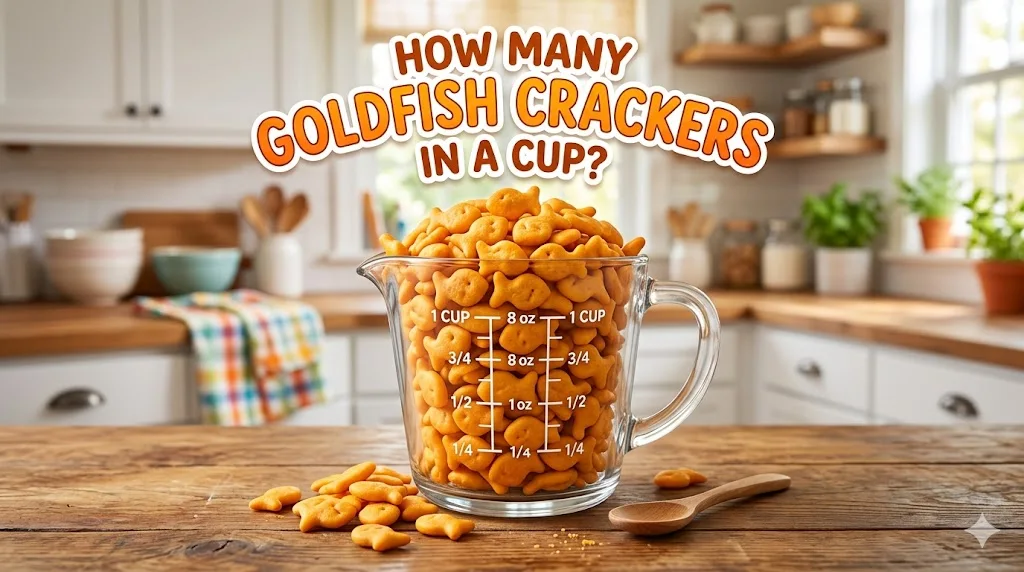
A standard 1 cup measuring cup holds about 80 to 90 Goldfish crackers.
For better accuracy:
- 1 cup (standard measurement): ~80–90 Goldfish crackers
- Official serving size: 55 crackers (about 30g)
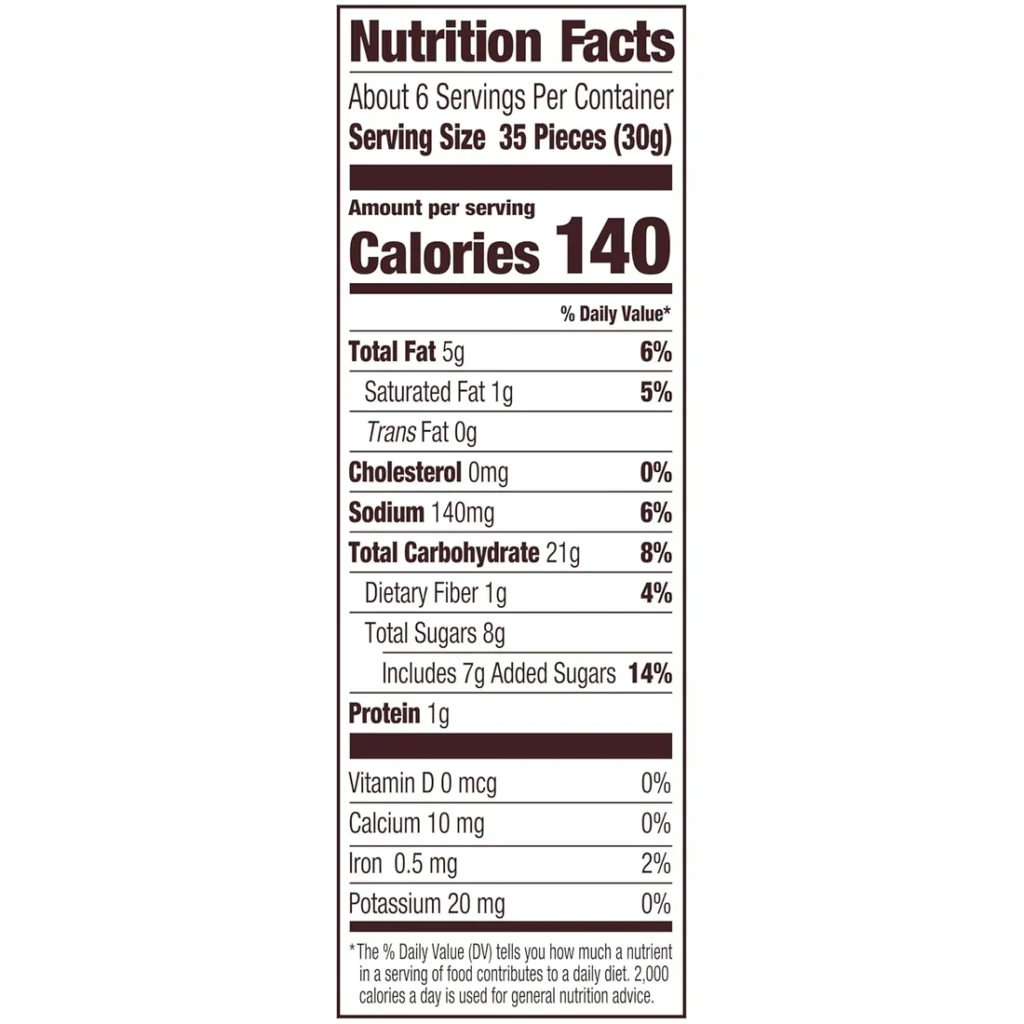
- Calories per serving: ~140 calories
- Half cup estimate: ~40–45 crackers
So if you’re casually measuring with out a food scale, 80–90 pieces per cup is the most practical real-world estimate.
You grab a bag of Goldfish crackers and settle onto the couch. You reach for a measuring cup because you want a consistent snack. As you pour the crackers, a question pops into your mind: How many Goldfish crackers in a cup are actually in there? It is a simple question that hides a surprising amount of detail. While the nutrition label gives you a weight, translating that weight into a standard volume like a cup is tricky.
Goldfish are iconic. They are shaped like fish, which means they are not perfect spheres. Their odd shape creates air gaps. These gaps make counting them by volume difficult compared to measuring a liquid or even a round cereal. Let’s break down the math and the physical reality of measuring this favorite snack.
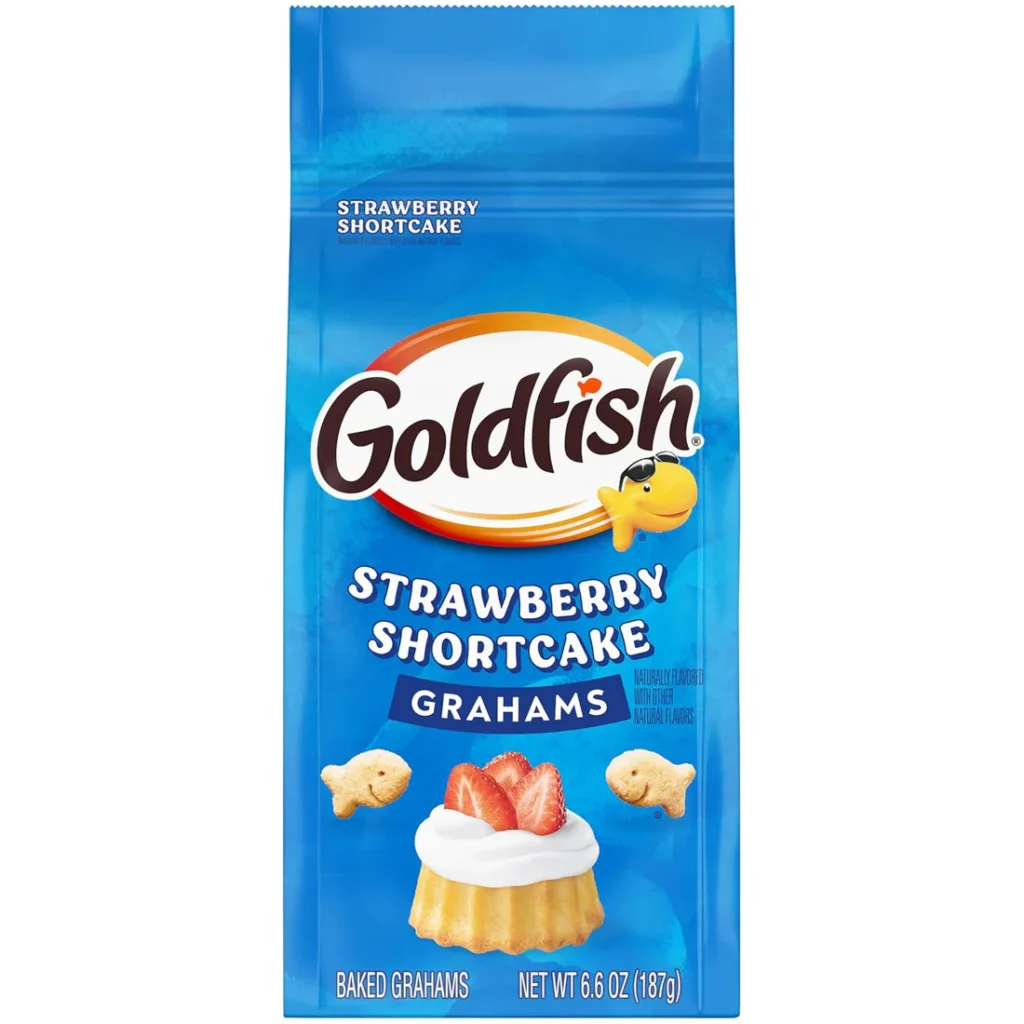
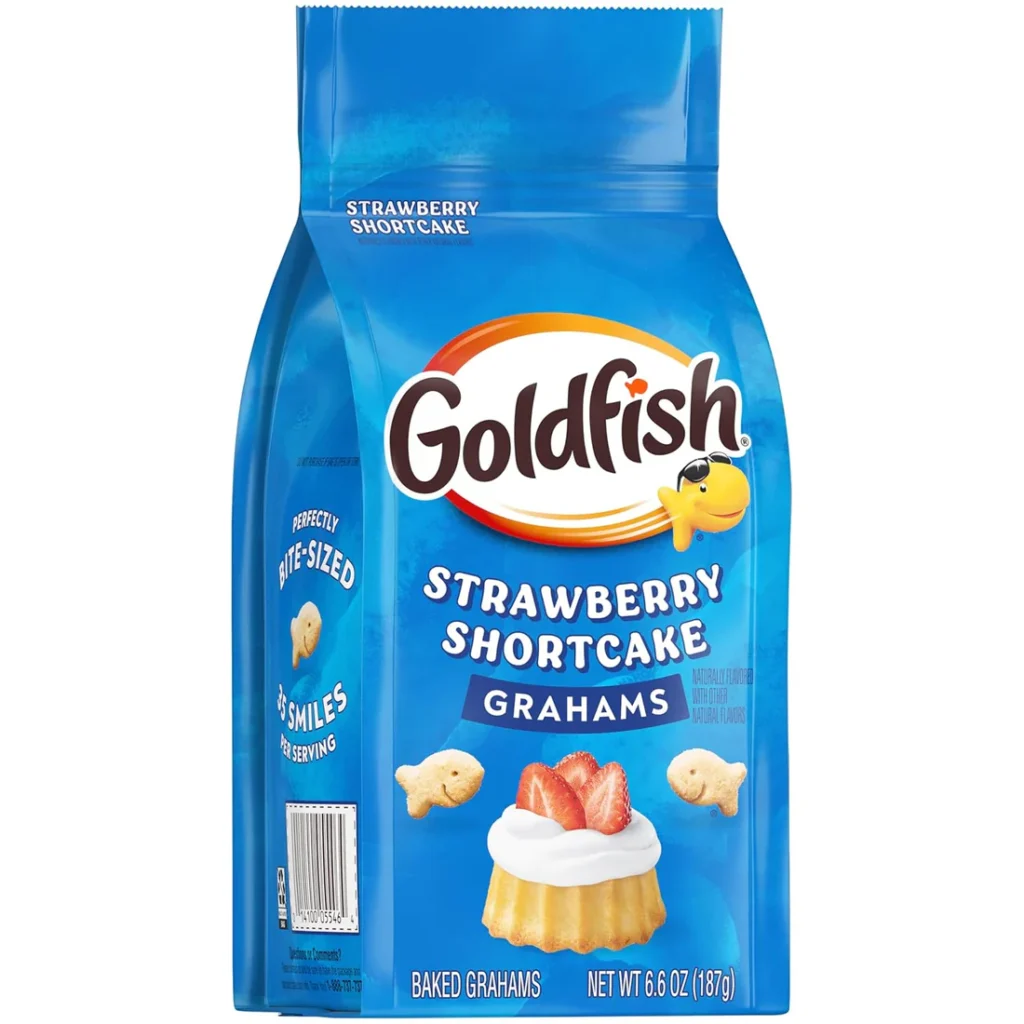
Goldfish Strawberry Shortcake Flavored Grahams Crackers
100 in stock
Decoding the Official Goldfish Serving Size Information
When you look at a box of Pepperidge Farm Goldfish Cheddar crackers, the nutrition label is your starting point. Manufacturers list the serving size by weight rather than count. This is standard for dry goods. A typical serving size for Goldfish is listed as 30 grams, which usually equals about 55 crackers.
(See official breakdown in our guide on Goldfish crackers serving size)
This 30-gram measurement is the gold standard for counting. It is precise because it relies on mass. However, most people do not keep a kitchen scale on their coffee table. Instead, we grab a measuring cup. This leads to a mismatch. A standard measuring cup is meant for volume, but snack crackers are meant for weight.
You might assume that a cup is a cup. In the world of baking, a cup is 8 fluid ounces. This volume is easy to measure with liquids. When you pour water into a measuring cup, it fills the bottom and sides perfectly. Goldfish crackers do not do that. They have irregular shapes and hard edges. This makes the conversion from “grams” to “cups” a bit of an estimation game.
Calculating How Many Goldfish Crackers in a Cup
To figure out the answer to “How Many Goldfish Crackers in a Cup,” we have to do some math based on density. If 55 crackers weigh 30 grams, one individual Goldfish cracker weighs about 0.545 grams. Now, we need to know how many grams of crackers fit into a standard 8-ounce measuring cup.
Research into snack density shows that crackers vary in how they pack. On average, a cup of standard Goldfish crackers weighs between 40 and 50 grams. This range accounts for how the crackers settle. If we take our average weight per cracker (0.545 grams) and apply it to this weight range, we get a clear estimate.
- At 40 grams, you have approximately 73 crackers.
- At 50 grams, you have approximately 91 crackers.
Based on this, a standard 8-ounce cup holds somewhere between 70 and 90 Goldfish crackers. This is significantly more than the official 55-cracker serving size. If you fill a cup to the top, you are likely consuming nearly 1.5 servings.
Factors That Change Your Goldfish Count
The numbers above are just an average. Several real-world factors can change how many crackers fit into your cup. The most obvious factor is the flavor variation.
Flavor Variations and Size Differences
Not all Goldfish are created equal. Original Cheddar crackers have a specific size and thickness. If you switch to Pretzel Goldfish, the crackers are denser and slightly larger. They pack differently. You might fit fewer Pretzel Goldfish in that same cup than you would with the cheddar variety. Specialty shapes, like the ones with extra flavor blasts or larger “Jumbo” versions, will change the math entirely.
See full breakdown of ( Types of Goldfish Crackers )
The Impact of Cracker Integrity
Broken crackers are a game-changer. When a box is near the end, it contains a lot of small crumbs and shattered pieces. These broken bits fill the air gaps between the whole crackers. This is known as “packing density.” If your cup is filled with broken pieces, you will fit more mass into that same volume. You might technically be eating the same weight, but the count of individual fish pieces will be much higher.
Suggested Blog: ( Recipes with Goldfish Crackers )
Scooping Technique
How you fill the cup matters. If you dip the measuring cup directly into the bag, you create a “heaping” cup. This forces more crackers into the space. If you pour the crackers gently into the cup and level off the top with a knife, you get a “level” cup. A heaping cup can easily hold 10 or 15 more crackers than a level one. For anyone counting calories or tracking snacks, this small difference adds up quickly.
Suggested Blog: ( Goldfish crackers serving size )

Practical Application: Goldfish in Common Containers
Most individual snack bags of Goldfish are labeled as 1-ounce portions. One ounce is about 28 grams. This is very close to the official 30-gram serving size. These bags are the best way to control your portion. When you pour a 1-ounce bag into a cup, it usually fills about two-thirds of an 8-ounce cup.
If you are trying to be consistent with your snacking, here are a few tips:
Read: ( Are Goldfish crackers healthy )
- Use a Scale: A small digital kitchen scale is the most accurate way to measure. It removes all the guessing.
- Mark Your Cup: If you have a favorite mug or reusable container, use a permanent marker to draw a line where a 30-gram serving sits. This helps you get it right every time without weighing.
- Use Smaller Containers: Smaller bowls or cups make a portion look larger. This can help you feel satisfied without needing to refill the container as often.
Nutritional Implications of Over-Portioning
It is easy to mindlessly eat while watching a movie or working. If you pour a full 8-ounce cup of Goldfish, you are likely eating about 160% of the recommended serving size. Over time, these extra calories, sodium, and fats can add up. see full breakdown in Goldfish crackers calories and nutrition).
Knowing that one cup contains nearly 90 crackers helps you make a better choice. You can decide to fill the cup halfway or choose a smaller vessel entirely.
Conclusion
The answer to “How Many Goldfish Crackers in a Cup” sits in a range between 70 and 90 crackers. The exact number depends on the flavor, how much the crackers are broken, and how aggressively you scoop them into the cup.
Understanding this volume riddle is helpful for managing your snacks. While the official serving size is 55 crackers, a standard cup is much larger. Use a scale or a marked container if you want to be precise. Otherwise, remember that a full cup is a generous serving. Enjoy your snack, but keep the math in mind to keep your portions in check.
Read More Related Blogs:
( Best Healthy Snacks for Kids ) ( Goldfish flavors ranked ) ( Types of Goldfish crackers )
Frequently Asked Questions (FAQs)
1. How many Goldfish crackers are in a cup exactly?
A standard 1 cup measuring cup holds about 80 to 90 Goldfish crackers, depending on how they are packed.
2. How many calories are in 1 cup of Goldfish crackers?
Since 1 serving (55 crackers) is about 140 calories, a full cup (80–90 crackers) contains roughly 200–230 calories.
3. Is 1 cup of Goldfish crackers the same as one serving?
No. One serving is smaller—55 crackers (about 30 grams). A cup is closer to 1.5 servings.
4. Can the number of Goldfish crackers per cup change?
Yes. The count can vary slightly based on packing method, cracker size, and whether the cup is level or tightly packed.
5. What is the best way to measure Goldfish crackers accurately?
For best accuracy, use a food scale and measure in grams (30g per serving). Cups are good for quick estimates, not precision.
6. Are all Goldfish flavors the same size?
Mostly yes, but slight differences exist between cheddar, pretzel, and flavored versions, which can slightly change the cup count.