
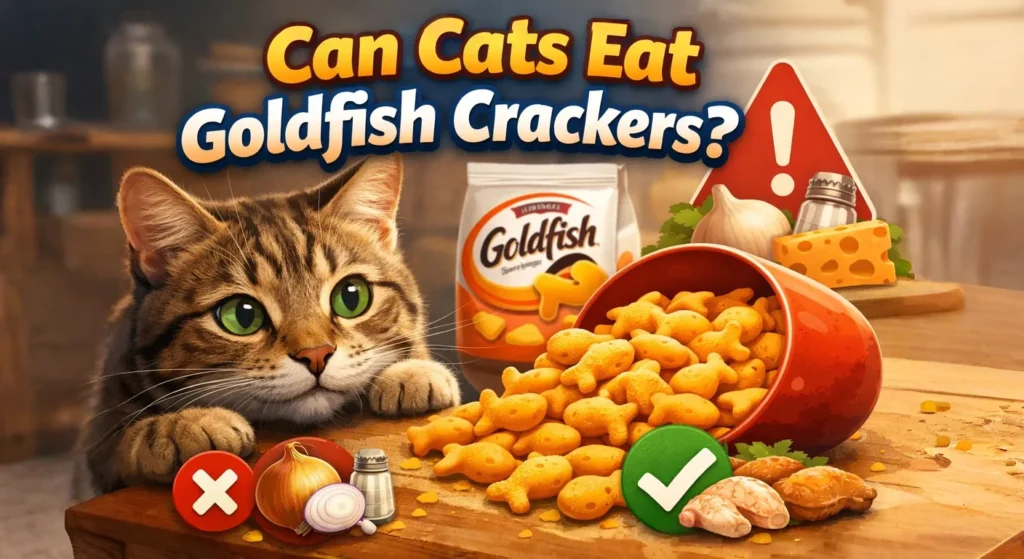
You’re lounging on the couch, munching on a handful of those addictive orange Goldfish crackers. Your cat sidles up, eyes wide and paws tapping, begging for just one taste. It’s a scene many pet owners know all too well. But can cats eat Goldfish crackers safely? These salty, cheesy treats might seem harmless fun, yet cats are obligate carnivores with specific needs. Their bodies crave meat-based proteins, not the carbs and flavors packed into human snacks. Let’s break it down to keep your furry friend healthy.
Read More: Can Dogs Eat Goldfish Crackers
Why Cats Crave Human Food
Cats have sharp noses that pick up every whiff of your snack. That cheesy aroma from Goldfish crackers draws them in like a magnet. Even if the food holds no real value for them, the smell and crunch spark their curiosity.
Texture plays a big role too. Cats love batting at or nibbling crunchy items. It mimics hunting small prey, which excites their instincts. So when you offer a piece, they’re not thinking nutrition—they’re chasing the thrill.
This craving often stems from our bond. We share meals, and they want in on the action. But giving in can lead to trouble if the snack doesn’t fit their diet.
Read More: Goldfish Crackers Flavors
Obligate Carnivores: Understanding Feline Nutritional Needs
An obligate carnivore means cats must eat meat to thrive. They get key nutrients like taurine from animal sources. Without it, their hearts and eyes suffer.
Goldfish crackers, on the other hand, rely on wheat flour and starches. These plant-based items provide empty carbs for cats. Their short digestive tracts handle proteins best, not grains.
Think of it like this: cats are wired for mice, not muffins. Feeding them human foods skips the essentials they need daily. A balanced cat diet focuses on high-protein kibble or wet food tailored just for them.
Read More: Goldfish Crackers Ingredients
The Ingredient Breakdown: What’s Actually in Goldfish Crackers?
Goldfish crackers come in flavors like original or cheddar. Common ingredients include enriched wheat flour, cheddar cheese, vegetable oils, and salt. Some versions add yeast, sugar, and spices for that savory kick.
These components suit human tastes but clash with cat biology. For instance, the flour base turns into quick energy for us, yet confuses a cat’s system. No vitamins or minerals here benefit feline health.
Breaking it down further reveals hidden concerns. Artificial colors and flavors boost appeal but add no nutrition. Always check labels, as recipes can shift over time.
Sodium Content and Dehydration Risk
Each serving of Goldfish crackers packs about 230 milligrams of sodium. That’s a lot for a small cat, whose daily needs top out at 50-100 milligrams. Too much salt pulls water from their body, leading to thirst and dry mouth.
Over time, high sodium strains the kidneys. Cats with early issues, like older ones, face bigger risks. Salt poisoning shows up as tremors or seizures if they eat a bunch.
Keep crackers out of reach to avoid this. A single nibble might not harm, but it’s not worth the gamble. Fresh water helps, yet prevention beats cure every time.
Carbohydrates and Fillers: Empty Calories for Cats
Flour and starches make up most of the cracker. Cats lack enzymes to break down these carbs well. Instead, they ferment in the gut, causing gas or loose stools.
These fillers add calories without fullness. Your cat might pack on pounds from snacking, raising diabetes odds. Studies show overweight cats face joint pain and shorter lives.
Stick to protein-rich foods instead. Carbs in treats like Goldfish offer zero perks for obligate carnivores. It’s like giving a race car sugar water—no fuel for the win.
Read More: Goldfish Crackers Nutrition
Artificial Flavors and Preservatives
Yellow 5 and 6 give that bright hue. While not deadly in bits, they irritate some cats’ stomachs. No studies prove benefits for pets; they’re just for looks.
Preservatives like TBHQ keep snacks fresh. In large amounts, they might upset digestion. Cats process chemicals differently than we do, so caution rules.
Flavor enhancers mimic cheese or herbs. They tempt but deliver empty promises. Opt for natural cat foods to skip these extras altogether.
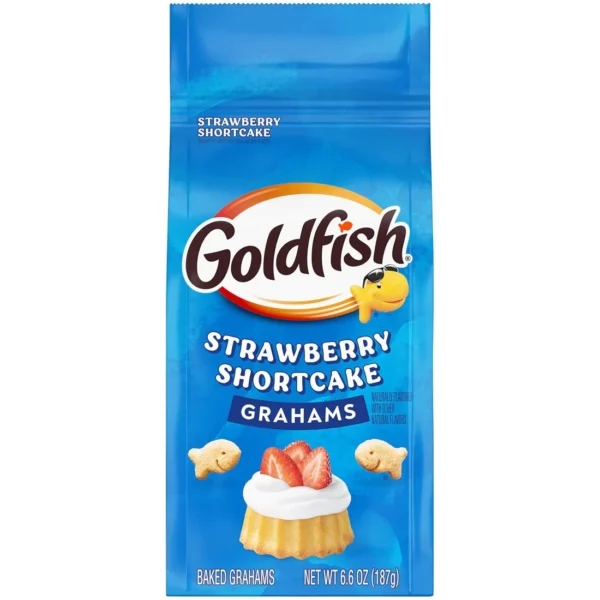
Goldfish Grahams Strawberry Shortcake Flavored Snack Crackers
50 in stock
Potential Health Risks Associated with Feeding Goldfish Crackers
Sharing snacks seems sweet, but risks lurk. Short-term woes include tummy troubles from salt and fats. Long-term, poor nutrition builds up problems.
One cracker won’t doom your cat. Yet habits form fast. Watch portions to dodge issues.
Real dangers tie to specific parts. Onion or garlic traces in flavors hit hard. They damage red blood cells, a silent threat.
Read More: Are Goldfish Crackers Healthy
Digestive Upset and Vomiting
High fat from oils can trigger quick reactions. Your cat might puke or have diarrhea within hours. Sudden changes shock their sensitive guts.
Salt worsens it by drawing fluids out. Dehydration follows, making symptoms drag on. Bland foods help recovery, but vets advise rest.
If begging persists, distract with toys. Avoid repeats to keep peace in the house.
The Danger of Onion and Garlic Powder
Many savory Goldfish types include onion or garlic powder. Even small amounts are toxic to cats. These compounds break down blood cells, leading to anemia.
Symptoms creep in slow: pale gums, weakness, fast breathing. The ASPCA lists them as top poisons for pets. One study notes effects from as little as 5 grams per kilo of body weight.
Scan ingredients close. If present, steer clear completely. Better safe than a vet visit.
Long-Term Risks: Obesity and Nutritional Deficiencies
Regular treats like these displace real meals. Cats miss taurine, vital for vision and heart. Deficiencies cause blindness or heart failure over months.
Extra carbs fuel fat gain. Obese cats, per vet data, live 2-3 years less. Joints ache, play drops off.
Balance matters. Feline diets prevent these gaps. Snacks should never replace core nutrition.
Small Amounts vs. Large Consumption: Assessing the Danger Level
Not all exposures equal. A lick here and there differs from daily handfuls. Assess based on your cat’s size and health.
Tiny bits might pass unnoticed. Larger eats demand watchfulness. Know the line to stay calm.
Factors like age play in. Kittens or seniors handle less. Always err on caution.
Accidental Ingestion: What to Monitor
If your cat snags one or two Goldfish crackers, stay alert. Watch for more drinking or peeing. Lethargy or odd stools signal issues.
Offer extra water. Skip food for a bit to settle the stomach. Most bounce back fine from accidents.
Track behavior over 24 hours. Normal energy means all clear. Jot notes if changes pop up.
When to Contact a Veterinarian Immediately
Rush to the vet if vomiting hits three times. Weakness, tremors, or pale gums scream help. Excessive thirst with no pee is red alert.
Suspect onion or garlic? Act fast—blood tests check damage. List what they ate, when, and amounts.
A checklist helps:
- Heavy panting or collapse
- Bloody stool or vomit
- No energy after 12 hours
Don’t wait; early care saves lives.
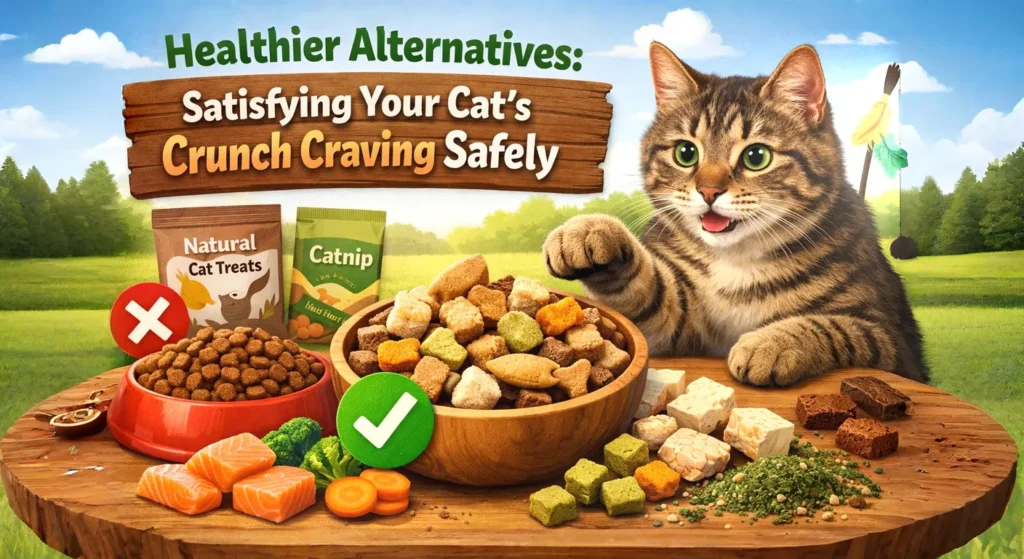
Healthier Alternatives: Satisfying Your Cat’s Crunch Craving Safely
Ditch the danger with cat-friendly options. Crunchy treats exist that fit their needs. Keep the fun without the harm.
Shop smart for products. Read labels to pick winners. Moderation keeps all good.
Home tweaks work too. Simple foods deliver texture safely. Your cat stays happy, you stay worry-free.
Read More: Goldfish Crackers Calories
Commercially Prepared Cat Treats (In Moderation)
Look for meat-based crunchies like freeze-dried chicken bits. Brands like Wellness offer low-salt versions. They pack protein, not junk.
Limit to 10% of daily calories. Treats enhance, not replace meals. Cats love the snap without risks.
Variety spices life. Rotate flavors to keep interest high. Check for grain-free if allergies lurk.
Safe, Whole-Food Options for a Crunchy Snack
Try plain, cooked chicken diced small. No salt or spices—just pure protein crunch. A teaspoon thrills without overload.
Dried fish flakes, unseasoned, mimic prey. Sprinkle a pinch for play. Watch portions to avoid mercury buildup.
Veggies like carrot sticks? Skip for cats. Stick to animal sources. These swaps build trust and health.
FREQUENTLY ASKED QUESTIONS
No, cats should not eat Goldfish crackers. While a small accidental bite is unlikely to cause serious harm, these snacks contain high salt, dairy, and sometimes onion powder, which can be harmful to cats over time.
If your cat eats one or two crackers, they will likely be fine. However, eating larger amounts can lead to vomiting, diarrhea, dehydration, or lethargy. Monitor your cat and contact a veterinarian if symptoms appear.
They are not always immediately toxic, but certain ingredients like onion or garlic powder can be dangerous. Regular consumption can also harm your cat due to salt and additives.
No, kittens should never eat Goldfish crackers. Their digestive systems are more sensitive, and even small amounts of processed food can upset their stomach or affect their development.
Cats are attracted to the strong cheese smell and crunchy texture. It stimulates their curiosity and hunting instincts, even though the food itself is not suitable for them.
Not really. Most cats are lactose intolerant, so cheese can cause digestive issues like gas, bloating, or diarrhea.
Conclusion: Keeping Your Feline Friend Flourishing
Goldfish crackers tempt with their crunch and cheese, but can cats eat them? In tiny accidents, they’re unlikely to cause big harm. Yet high sodium, carbs, and possible onion or garlic make them a no-go for regular sharing.
Stick to feline-focused foods for peak health. Obligate carnivores thrive on meat, not human munchies. Risks like dehydration, tummy woes, or worse outweigh any quick joy.
Prioritize your cat’s needs today. Swap risky snacks for safe treats. Watch them pounce and play— that’s the real reward. If doubts arise, chat with your vet for tailored tips. Your furry pal deserves the best.